



Sorting
TOP

Legal-for-trade truck scale ESSMANN - maximum load 600 kg - resolution 0.1 kg - weighing surface 900 x 700 mm - Systec IT1 weighing terminal - steel, painted


- Weighing range [Max] in kg: 600
- Weighing plate width in mm: 900
- Weighing plate depth in mm: 700
- Weighing plate material: Steel, painted
- Power supply: plug-in power supply
- Interfaces series: Ethernet, I/O, USB PORT, RS-485, RS-232
- Functions: Dosing, Checking, Dynamic switching
- Digit increment [d] in g: 100
- ATEX: Zone 1, Zone 2, Zone 21, Zone 22
- Warranty services: DAkkS calibratable, ISO calibratable
- Industrial manufacturing, logistics support
- Precise, robust measurement accuracy
Buy here
€2,405.00*
TOP
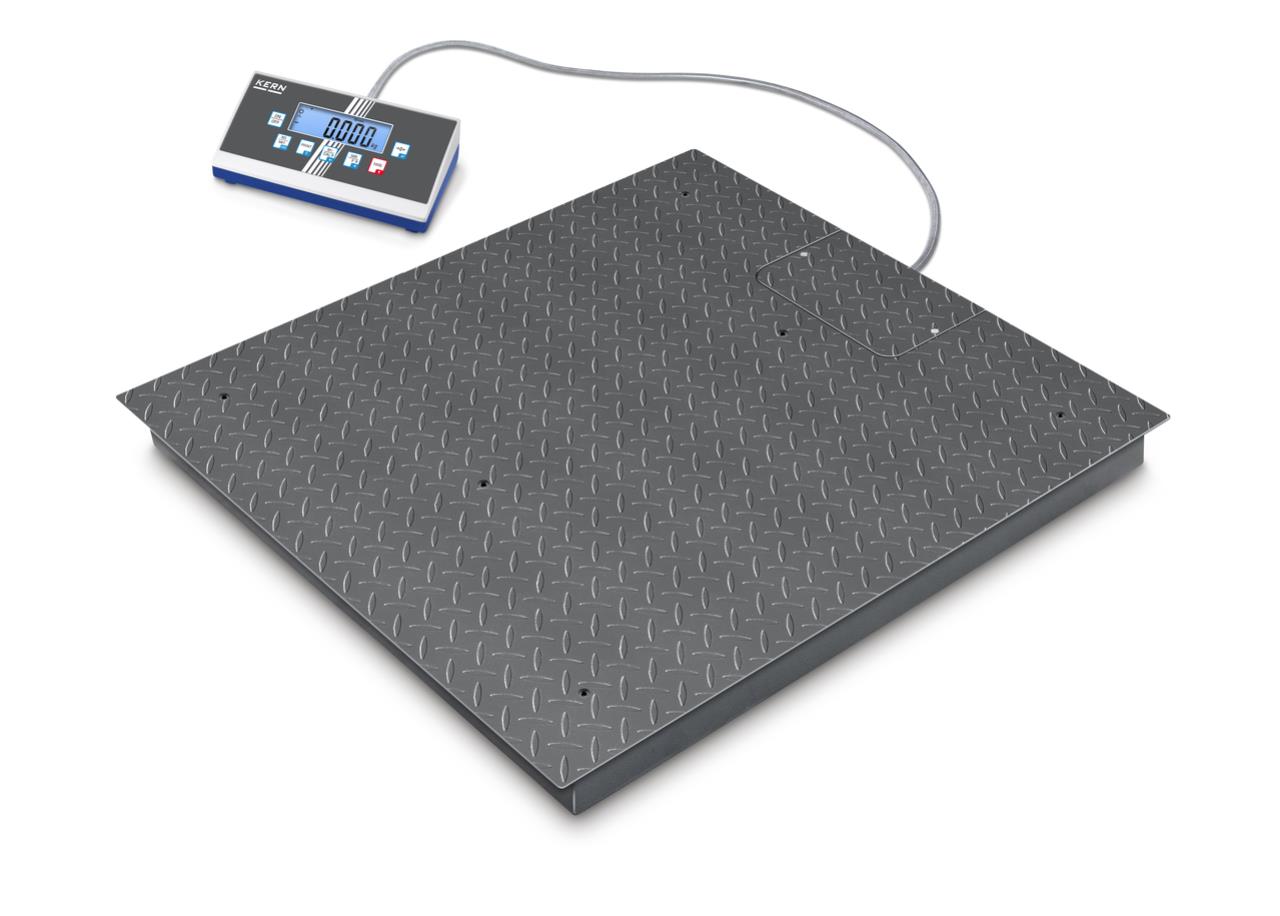
Floor scale KERN BIC 1T-4 - Maximum load 1500 kg - Resolution 200 g - Weighing surface 1200 x 1500 mm - Steel, powder-coated


- Weighing range [Max] in kg: 1500
- Weighing plate width in mm: 1200
- Weighing plate depth in mm: 1500
- Weighing plate material: Steel, powder-coated
- Power supply: plug-in power supply
- Functions: Switching between weighing units
- Digit increment [d] in g: 200
- Warranty services: DAkkS calibratable
- >li>Precision weighing of industrial loads >li>Robust, high-resolution measurement accuracy
Buy here
€1,300.00*
TOP
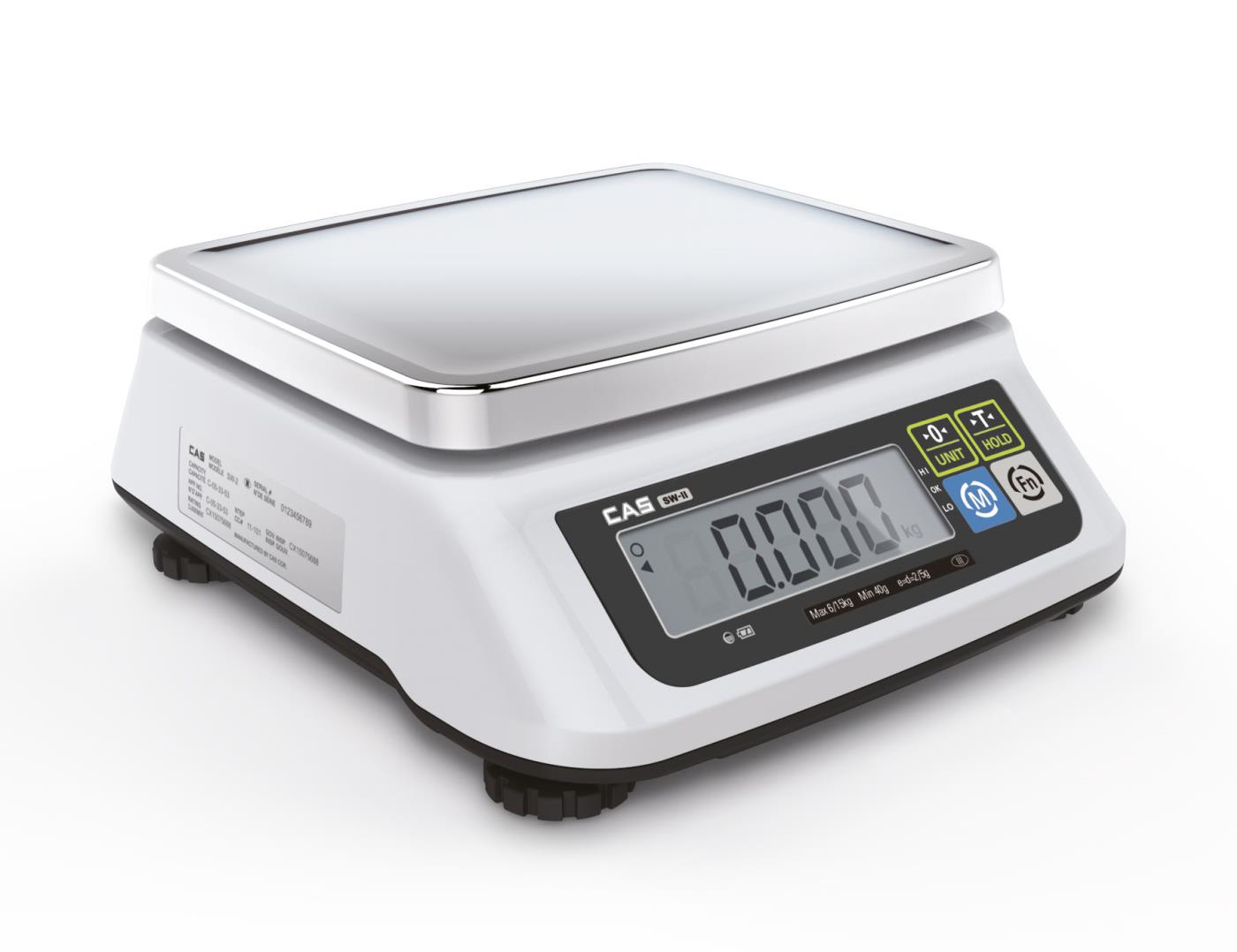
Verified checkweigher CAS SW-II-6 - Maximum load 6 kg - Resolution 1 g - Weighing surface 226 x 187 mm - Stainless steel platform

- Weighing range [Max] in kg: 6
- Weighing plate width in mm: 226, 320
- Weighing plate depth in mm: 240, 187
- Weighing plate material: Stainless steel
- Power supply: plug-in power supply
- Interfaces series: RS-232
- Functions: Totalling, Taring, Price calculation
- Digit increment [d] in g: 1
- Warranty services: DAkkS calibratable, ISO calibratable
SALE
TOP

Counting scale A&D HC-15Ki - Maximum load 15 kg - Resolution 2 g - Weighing surface 300 x 210 mm - Stainless steel - Warranty 3 years

- Weighing range [Max] in kg: 15
- Weighing plate width in mm: 300
- Weighing plate depth in mm: 210
- Weighing plate material: Stainless steel
- Power supply: plug-in power supply
- Interfaces series: RS-232
- Functions: Checking, Totalling, Taring
- Digit increment [d] in g: 2
- Warranty services: DAkkS calibratable, ISO calibratable
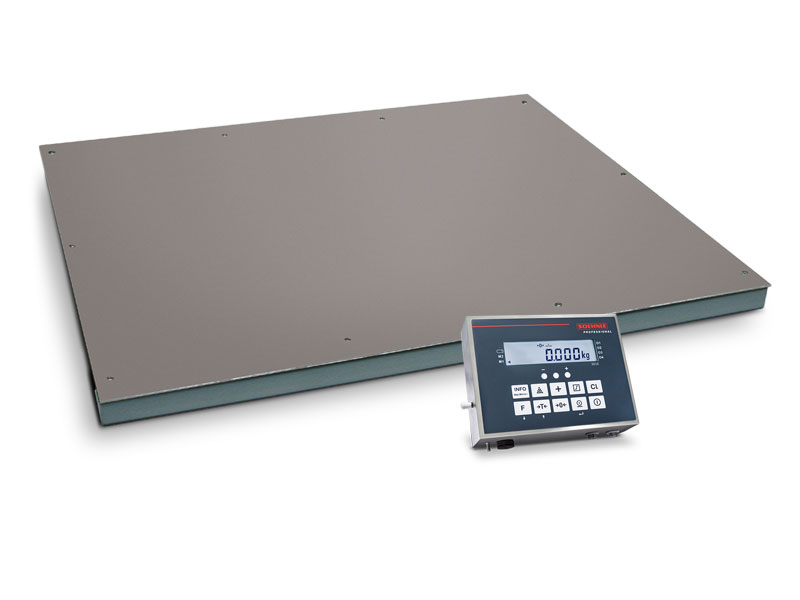
Floor scale Soehnle 7766.23.001 - Maximum load 1500 kg - Resolution 200 g - Weighing surface 1500 x 1250 mm - Steel, lacquered

- Weighing range [Max] in kg: 1500
- Weighing plate width in mm: 1500
- Weighing plate depth in mm: 1250
- Weighing plate material: Steel, painted
- Power supply: plug-in power supply
- Interfaces series: Profinet, Profibus, Ethernet, I/O
- Functions: Dosing, Checking, Dynamic switching
- Digit increment [d] in g: 200
- Warranty services: DAkkS calibratable, ISO calibratable
- Industry and logistics measurements
- Rugged, precise weight detection
Buy here
€1,800.00*
€1,584.00*
TOP

Legal-for-trade floor scale ESSMANN - Maximum load 1500 kg - Resolution 0.2 kg - Weighing surface 1000 x 1000 mm - Systec IT1 weighing terminal - Steel, painted
- Weighing range [Max] in kg: 1500
- Weighing plate width in mm: 1000
- Weighing plate depth in mm: 1000
- Weighing plate material: Steel, painted
- Power supply: plug-in power supply
- Interfaces series: Ethernet, I/O, USB PORT, RS-485, RS-232
- Functions: Dosing, Checking, Dynamic switching
- Digit increment [d] in g: 200
- ATEX: Zone 1, Zone 2, Zone 21, Zone 22
- Warranty services: DAkkS calibratable, ISO calibratable
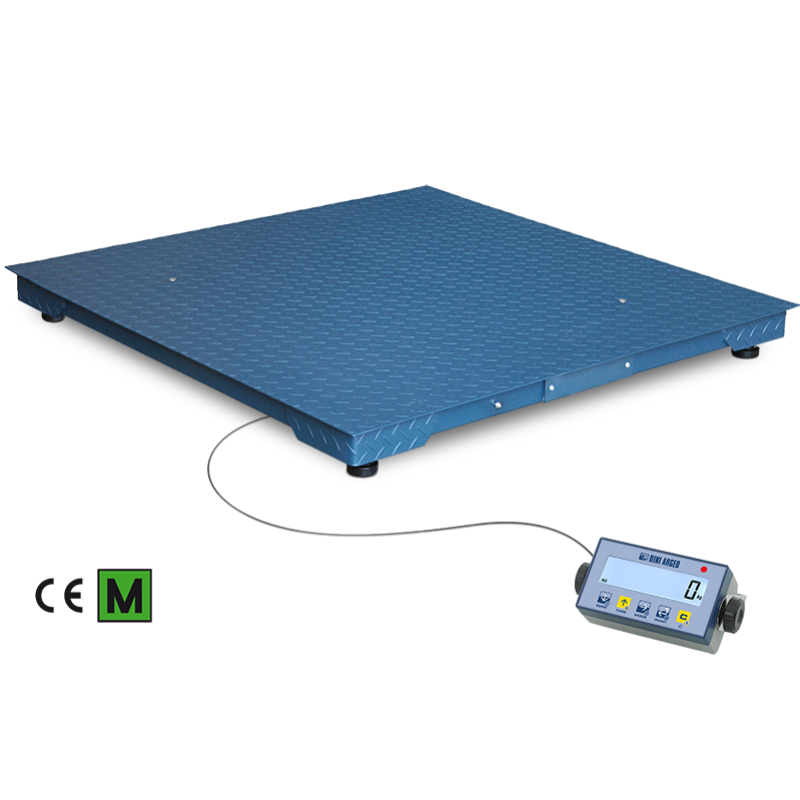
Legal-for-trade floor scale Dini WEFLE3000-1 - Maximum load 3000 kg - Resolution 500 g - Weighing surface 1500 x 1500 mm - Painted steel
- Industry, Trade, Logistics, Agriculture
- Robust, precise, multifunctional, investment-safe
Buy here
€1,270.00*
€1,143.00*

Legal-for-trade crane scale EHP LDN 1 - Maximum load 1 t - Resolution 0.5 kg - Guarantee 3 years - Impact protection, remote control
- Weighing range [Max] in kg: 1000
- Power supply: Rechargeable battery
- Functions: Taring, Compound weighing
- Digit increment [d] in g: 500
- Warranty services: ISO calibratable, Calibratable
- Industry, Commerce, Precision Weighing
- Robust, Accurate, Remote-Controlled, Safe
Buy here
€1,905.00*
€1,809.75*

Crane scale Dini MCWNT1-3 - maximum load 1.5 t - resolution 0.1 kg
- Weighing range [Max] in kg: 1500
- Power supply: batteries, Rechargeable battery
- Interfaces series: WLAN
- Functions: Percentage determination, Formulation
- Digit increment [d] in g: 100
- Warranty services: ISO calibratable


- Industry, Logistics, Manufacturing, Construction
- High precision, easy operation
Buy here
€555.00*
€499.50*

Compact scale Ohaus Valor™ 2000 - Maximum load 15 kg - Resolution 2 g - Weighing surface 242 x 190 mm - Stainless steel
- Weighing range [Max] in kg: 15
- Weighing plate width in mm: 242
- Weighing plate depth in mm: 190
- Weighing plate material: Stainless steel
- Power supply: plug-in power supply
- Functions: Checking
- Digit increment [d] in g: 2
- Warranty services: DAkkS calibratable, ISO calibratable

Legal-for-trade truck scale KERN NFB 600K200M - Maximum load 600 kg - Resolution 200 g - Weighing surface 1600 x 1200 mm - Metal, painted
- Weighing range [Max] in kg: 600
- Weighing plate width in mm: 1600
- Weighing plate depth in mm: 1200
- Weighing plate material: Metal, painted
- Power supply: batteries, plug-in power supply
- Interfaces series: RS-232
- Functions: Totalling, Piece counting
- Digit increment [d] in g: 200
- Warranty services: DAkkS calibratable, Calibratable
- Diverse industry weighing applications
- Time savings, efficiency, precision, safety
Buy here
€1,850.00*
€1,665.00*
TOP
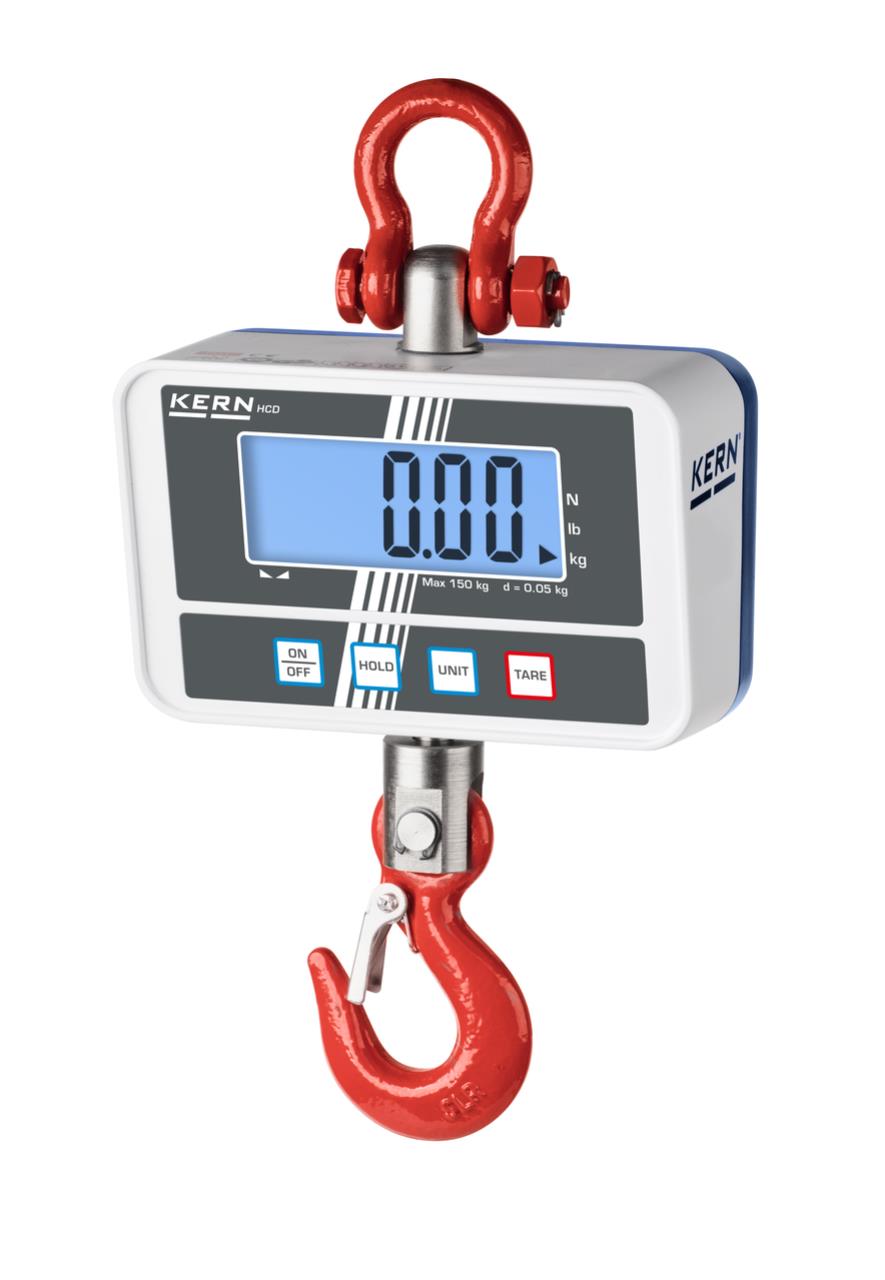
Crane scale KERN HCD 100K-2 - maximum load 150 kg - resolution 0.05 kg
- Weighing range [Max] in kg: 150
- Power supply: batteries, Rechargeable battery
- Digit increment [d] in g: 50
- Warranty services: DAkkS calibratable
- Versatile, robust, precise, safe
- High-precision robust weighing design
Buy here
€210.00*
€189.00*
SALE
TOP

Platform scale KERN EOB 15K5 - Maximum load 15 kg - Resolution 5 g - Weighing surface 315 x 305 mm - Stainless steel
- Weighing range [Max] in kg: 15
- Weighing plate width in mm: 315
- Weighing plate depth in mm: 305
- Weighing plate material: Stainless steel
- Power supply: plug-in power supply
- Functions: Weighing animals
- Digit increment [d] in g: 5
- Warranty services: DAkkS calibratable
- Cross-industry precision weighing applications
- Excellent accuracy, robust construction
Buy here
€185.00*
€135.98*
TOP

Crane scale KERN HFD 600K-1 - Maximum load 600 kg - Resolution 0.05 kg
- Weighing range [Max] in kg: 600
- Power supply: batteries, plug-in power supply
- Digit increment [d] in g: 50
- Warranty services: DAkkS calibratable

Bench scale KERN FOB 6K2 - Maximum load 6000 g - Resolution 2 g - Weighing surface 175 x 165 mm - Stainless steel

- Weighing plate width in mm: 175
- Weighing plate depth in mm: 165
- Weighing plate material: Stainless steel
- Power supply: batteries, plug-in power supply
- Functions: Weighing with tolerance range
- Digit increment [d] in g: 2
- Warranty services: DAkkS calibratable
- Versatile in various environments
- Robust, intuitive stainless steel construction
Buy here
€240.00*
€216.00*

Drive-through scales Soehnle 7764.20.001 - Maximum load 300000 g
- Weighing range [Max] in kg: 300
- Weighing plate width in mm: 1000
- Weighing plate depth in mm: 1000
- Weighing plate material: Steel, painted
- Power supply: batteries, plug-in power supply
- Interfaces series: Ethernet, USB PORT, RS-485, WLAN, RS-232
- Functions: Percentage determination, Checking
- Digit increment [d] in g: 50
- Warranty services: DAkkS calibratable, ISO calibratable
- Industrial continuous operation, maximum load capacity
- Precise measurement of heavy loads
Buy here
€1,995.00*
€1,755.60*
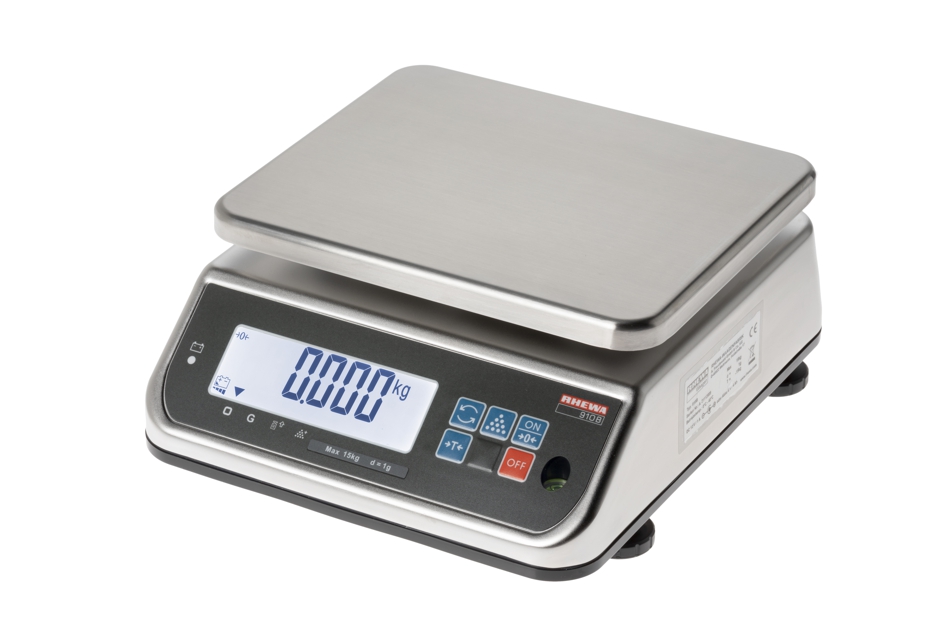
Bench scale Rhewa 910B
- Weighing range [Max] in kg: 15
- Weighing plate width in mm: 236
- Weighing plate depth in mm: 200
- Weighing plate material: Stainless steel
- Functions: Taring, Piece counting
- Digit increment [d] in g: 1

Legal-for-trade floor scale Dini WEFLDK3000-1 - Maximum load 3000 kg - Resolution 500 g - Weighing surface 1500 x 1250 mm - Steel, painted
- Weighing range [Max] in kg: 3000
- Weighing plate width in mm: 1500
- Weighing plate depth in mm: 1250
- Weighing plate material: Steel, painted
- Power supply: batteries, plug-in power supply
- Interfaces series: RS-232
- Functions: Percentage determination, Formulation
- Digit increment [d] in g: 500
- Warranty services: DAkkS calibratable, ISO calibratable
- Industry, Trade, Storage, Production
- Precise, Robust, Calibratable, User-friendly
Buy here
€1,500.00*
€1,350.00*

Soehnle 7786.22.001 Floor scales for verification - Maximum load 600 kg - Resolution 100 g - Weighing surface 1500 x 1250 mm - Steel, lacquered
- Weighing range [Max] in kg: 600
- Weighing plate width in mm: 1500
- Weighing plate depth in mm: 1250
- Weighing plate material: Steel, painted
- Power supply: plug-in power supply
- Interfaces series: Profinet, Profibus, Ethernet, I/O
- Functions: Percentage determination, Dosing
- Digit increment [d] in g: 100
- ATEX: Zone 2, Zone 22
- Warranty services: DAkkS calibratable, ISO calibratable
- Industrial, flexible, precise, reliable
- Robust, maintenance-free, high accuracy
Buy here
€3,165.00*
€2,785.20*

Crane scale ADAM LHS 1500 - maximum load 1.5 t - resolution 0.2 kg
- Weighing range [Max] in kg: 1500
- Power supply: plug-in power supply
- Functions: Taring
- Digit increment [d] in g: 0,0002
- Warranty services: DAkkS calibratable, ISO calibratable
- Versatile in industrial environments
- Robust precise weighing system
Buy here
€530.00*
€477.00*

Legal-for-trade floor scale Soehnle 7788.22.001 - Maximum load 600 kg - Resolution 100 g - Weighing surface 1500 x 1250 mm - Stainless steel
- Weighing range [Max] in kg: 600
- Weighing plate width in mm: 1500
- Weighing plate depth in mm: 1250
- Weighing plate material: Stainless steel
- Power supply: plug-in power supply
- Interfaces series: Profinet, Profibus, Ethernet, I/O
- Functions: Percentage determination, Dosing
- Digit increment [d] in g: 100
- ATEX: Zone 2, Zone 22
- Warranty services: DAkkS calibratable, ISO calibratable
- Diverse industries, precise weighing
- Reliable, robust, precise, flexible
Buy here
€4,925.00*
€4,334.00*

Crane scale ADAM LHS 500 - Maximum load 0.5 t - Resolution 0.1 kg
- Weighing range [Max] in kg: 500
- Power supply: plug-in power supply
- Functions: Taring
- Digit increment [d] in g: 0,0001
- Warranty services: DAkkS calibratable, ISO calibratable
- Industry, Commerce, Heavy Weighing
- Precise, Durable Measuring Technology
Buy here
€525.00*
€472.50*

Legal-for-trade floor scale Dini ETMI6 - Maximum load 600 kg - Resolution 100 g - Weighing surface 1250 x 1000 mm - Stainless steel
- Weighing range [Max] in kg: 600
- Weighing plate width in mm: 1250
- Weighing plate depth in mm: 1000
- Weighing plate material: Stainless steel
- Power supply: batteries, plug-in power supply
- Interfaces series: RS-232
- Functions: Percentage determination, Formulation
- Digit increment [d] in g: 100
- ATEX: Zone 1, Zone 2, Zone 21, Zone 22
- Warranty services: DAkkS calibratable, ISO calibratable
- Industrial and Commercial Scales
- Robust Precision Measuring Instruments
Buy here
€4,320.00*
€3,888.00*
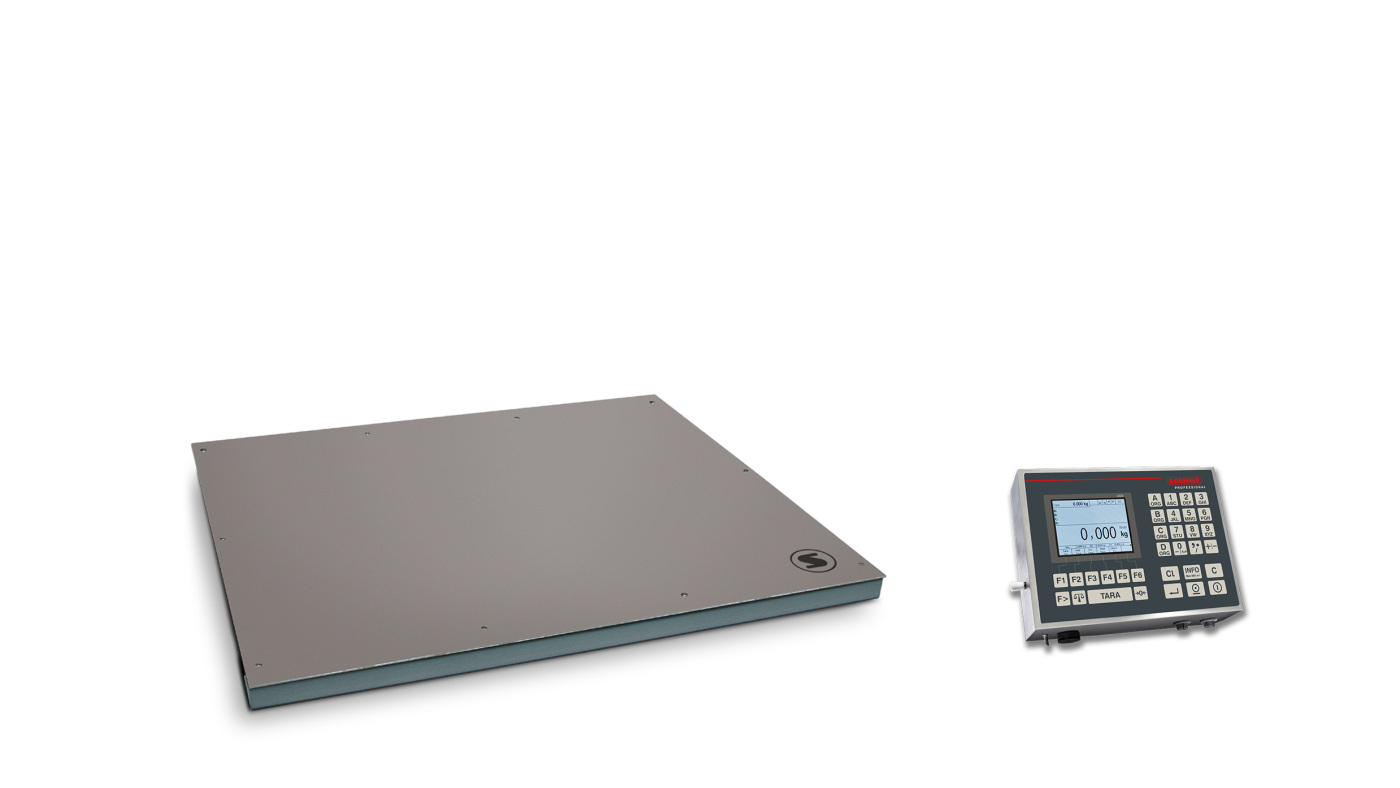
Soehnle 7783.23.001 Floor scales for legal metrology - Maximum load 1500 kg - Resolution 200 g - Weighing surface 1500 x 1250 mm - Painted steel
- Weighing range [Max] in kg: 1500
- Weighing plate width in mm: 1500
- Weighing plate depth in mm: 1250
- Weighing plate material: Steel, painted
- Power supply: plug-in power supply
- Interfaces series: Profinet, Profibus, Ethernet, I/O
- Functions: Percentage determination, Dosing
- Digit increment [d] in g: 200
- Warranty services: DAkkS calibratable, ISO calibratable
- Industry, Commerce, Robust, Accurate
- High-Precision, User-Friendly, Robust, Versatile
Buy here
€2,025.00*
€1,782.00*
Unsere Marken








Buy Industrial Scales Online at ESSMANN SHOP - Heavy-Duty Scales, Platform Scales, Counting Scales & Co.
Professional industrial scales for equally professional users: Due to their specialized applications and the high requirements for measuring accuracy as well as speed, industrial scales are divided into a number of specific types - for example, those for particularly heavy loads, with programmable counting capabilities, or flexible application areas. At ESSMANN, as a business owner, industrialist or public sector representative, you can conveniently order your new industrial scale online - including the comprehensive ESSMANN service offerings.Types and Applications of Industrial Scales: How to Find a Scale that Fits Your Business Processes
Please note: At ESSMANN, as a commercial customer, you can buy industrial scales online, our range is not geared towards private individuals. Accordingly, the respective scales are specifically designed for individual business processes. They are used, for example, in logistics, production, and other departments, and our customers include industries such as the food, tool, and automotive industries. All share the need for a robust, durable, and at the same time highly precise scale - which must be designed for the respective work step. For this reason, you can buy various industrial scales online at ESSMANN. These include, for instance: - Heavy-Duty Scales - Platform Scales - Counting Scales - and mobile scales All scales offered here can be seamlessly integrated into your operational processes.Furthermore, industrial scales are distinguished from conventional scales in terms of their properties: including the materials used, the design, and the protection class. Industrial scales that you buy online should withstand daily use in harsh environments and provide reliable results. This is of essential importance with regard to the economy of such heavy-duty scales, platform scales, counting scales, and Co., as they have all, once integrated into operational processes, often been used a hundred times a week and even more.
Precision Scales and Their Use
Our Crane Scales are equipped with modern features such as remote displays and come from leading manufacturers such as EHP. Whether you need an industrial scale up to 30 kg, 50 kg, 100 kg or an industrial scale of 2000 kg, we have the right product for you. Our range also includes Kern industrial scales, Sartorius industrial scales, Soehnle industrial scales, and Mettler Toledo industrial scales.Accessories and Service for Your Industrial Scale
In Precision Scales, particularly sensitive weighing cells are installed that enable an exact determination of the weight of smaller items, manageable amounts, or individual substances. Often these have various built-in functions, such as integrated calibration automatons, enabling precise measurements in the milligram range. Such industrial scales are obviously used wherever light substances and weights need to be measured with great precision - for example, in laboratories and generally where chemical additives are used. In the jewelry and precious metal trade, as well as in science and research, these industrial scales, which you can buy online here, also generate reliable advantages - starting with long-term stability and tamper protection, right up to precise data capture and evaluation.
If you buy Counting Scales online at ESSMANN, they will henceforth facilitate inventory and picking processes for you and your employees. Browse through the respective products in our related category: The individual models can typically capture a total load in the double-digit kilogram range, often with highly precise and detailed readability of around 0.1 gram.
When you want to buy Platform Scales or other models online, always first ask yourself where in the company the industrial scales will be used and what they will need to measure later. For small amounts, light powder, or liquids, for example, precision scales would be the means of choice. If you want to count produced goods, such as tablets and capsules, counting scales are suitable for this purpose. If you need to weigh heavy loads at a high operational speed, crane and heavy-duty scales are suitable, among others. Also, always consider the maximum measuring spectrum, which we transparently provide on the respective product pages of the industrial scales.
Also, when you buy Platform Scales, mobile scales, and Co. online, consider the various statutory regulations and requirements, for example, for explosion protection/ATEX, HACCP, and IP protection classes as well as further standards. In the company, you should also use your acquired industrial scales according to the material, which usually means protecting them from direct environmental influences as much as possible. Also, electrostatic influences and vibrations, especially during a measurement, need to be considered. The team at ESSMANN will be happy to provide individual advice: If you already know what you need, you can, of course, order your industrial scales online right away!
```
Please note that for an accurate representation of the product category and correct targeting of potential customers, it's crucial to adapt the context as well as the legal and technical terms to the linguistic and cultural specifics of the English-speaking audience. If links or specific product names have English versions or equivalents, they should be updated accordingly. Additionally, regulatory body references (e.g., ATEX, HACCP) are left as is, bearing in mind they are recognized internationally.
Heavy-Duty Scales, Platform Scales, and Pallet Scales Online
This type of industrial scales is suitable wherever it gets heavy: Platform scales are available both in stationary and movable versions, whereby you should consider what exactly will be weighed with them later. Pallet scales differ significantly in appearance from conventional platform scales: Easily recognizable by their U-shape, which serves for easy loading of standardized Euro pallets. Typically, pallet scales have a weighing range of up to three tons, although individual models and designs may differ. They are typically made of stainless steel, due to their high weight capacity. Like heavy-duty scales and floor scales, these are located at ground level to allow for easy loading and subsequent measuring. Some heavy-duty scales come factory-equipped with an integrated RS-232 interface. This allows for uncomplicated data exchange at the industrial level and can therefore sustainably optimize already developed operational processes, from weighing to recording in the intranet and specialized software. Heavy-duty scales have a number of functions that may be important or at least helpful to you, such as piece counting, hold, or tare function.Counting Scales - Precise, Quantitative Determination of Parts
As can be easily deduced from the name, the Counting Scales you can buy online here have an integrated counting function - which in turn distinguishes them from other industrial scales. When you buy industrial scales and specific counting scales online here, you can efficiently and quickly carry out piece count determinations of individual mass parts. Such counting scales are used wherever relatively light weighing goods exist in large quantities. If counting scales consist of two surfaces, one speaks more precisely of a counting system scale. In these, one element is used as a high-resolution reference, which allows the individual weight of the parts to be measured to be precisely determined. The second weighing surface, referred to in professional jargon as the quantity scale, has been designed for higher weights and more parts - and is capable, in combination with the first surface, of reliably and traceably calculating the total sum.If you buy Counting Scales online at ESSMANN, they will henceforth facilitate inventory and picking processes for you and your employees. Browse through the respective products in our related category: The individual models can typically capture a total load in the double-digit kilogram range, often with highly precise and detailed readability of around 0.1 gram.
Buy Mobile Scales Online - Of Course, Brand Quality at ESSMANN
Also consider mobile scales, which you can buy online here. These grant you and your staff flexibility, as their name correctly suggests, you can use mobile scales everywhere on the company premises and, for example, even at your business partners and customers. Mobile scales have an attached wheel system, which is why they visually resemble pallet jacks. This allows these industrial scales to be easily transported from A to B and to carry out the respective measurement on-site. Often, mobile scales have a wireless interface, which allows you remote transmission to deployed enterprise resource planning systems and specialized software documentation. Mobile scales facilitate workflows and can be effectively "shared" among departments and employees, making them a cost-effective solution.Crane Scales and Hanging Scales Online
This type of industrial scales, which you can also buy online at ESSMANN, is suitable for particularly large, bulky, and heavy loads. The actual scale thus resembles a crane installation, with the load being weighed in a hanging position. Hanging and crane scales can weigh an enormous load, for example up to 10,000 kg or even up to 30,000 kg, depending on the model. Therefore, these industrial scales are indispensable, especially where heavy parts or products need to be moved and weighed. In the automotive industry and space exploration, these industrial scales are a fixed part of the operating equipment. As a rule, such industrial scales have a possibility to remotely capture the load. The weight does not necessarily have to be read at the actual scale, it can alternatively also be done at a corresponding remote control. Furthermore, these industrial scales can thus be controlled, sometimes even including the carried load.Buy Industrial Scales Online - Your Benefits at ESSMANN
Representatives from the industry rely on highly precise industrial scales that should always be as flexible as possible to use and must also comply with the principles of economy. In our range, among the industrial scales that you can buy online, we have Heavy-Duty Scales, Platform Scales, Mobile Scales and many other models. Regardless of the scale chosen, you always benefit from a number of tangible and measurable advantages. - different industrial scales for various requirements and applications - intensive and individual consultation by the ESSMANN service team - specialized service for industrial scales, from calibration, verification, and maintenance to repair services All industrial scales that you can order online here are characterized by their robust and durable workmanship, which is specifically designed for the industrial environment and typical application areas. Useful functions and features of the industrial scales make your measurements easier to perform and also accelerate business processes sustainably - which in turn increases efficiency in production and, for example, logistics.When you want to buy Platform Scales or other models online, always first ask yourself where in the company the industrial scales will be used and what they will need to measure later. For small amounts, light powder, or liquids, for example, precision scales would be the means of choice. If you want to count produced goods, such as tablets and capsules, counting scales are suitable for this purpose. If you need to weigh heavy loads at a high operational speed, crane and heavy-duty scales are suitable, among others. Also, always consider the maximum measuring spectrum, which we transparently provide on the respective product pages of the industrial scales.
Additional Criteria When Buying Industrial Scales Online
You want to buy scales online at ESSMANN? Orient yourself around the following values: - for a few micrograms up to about 30 kg, industrial table scales are recommended - for a measuring range of about 30 to 150 kg, floor scales can be bought online - from a measuring limit of 300 kg upwards, only floor scales are in question - for particularly high weights, you can buy heavy-duty scales online It is also crucial that the material of the industrial scales you buy online matches your industry and individual requirements. For example, if hygiene, chemical resistance, and aggressive cleaning of the industrial scales are unavoidable, you must buy scales made of matching materials online. Stainless steel scales with high corrosion resistance are suitable for this purpose. Furthermore, there are specific requirements, for example, in the pharmaceutical, food, and beverage industries.Also, when you buy Platform Scales, mobile scales, and Co. online, consider the various statutory regulations and requirements, for example, for explosion protection/ATEX, HACCP, and IP protection classes as well as further standards. In the company, you should also use your acquired industrial scales according to the material, which usually means protecting them from direct environmental influences as much as possible. Also, electrostatic influences and vibrations, especially during a measurement, need to be considered. The team at ESSMANN will be happy to provide individual advice: If you already know what you need, you can, of course, order your industrial scales online right away!