




- Weighing range [Max] in kg: 6
- Power supply: plug-in power supply
- Digit increment [d] in g: 1


- Flexible in trading areas
- User-friendly, precise pricing calculation
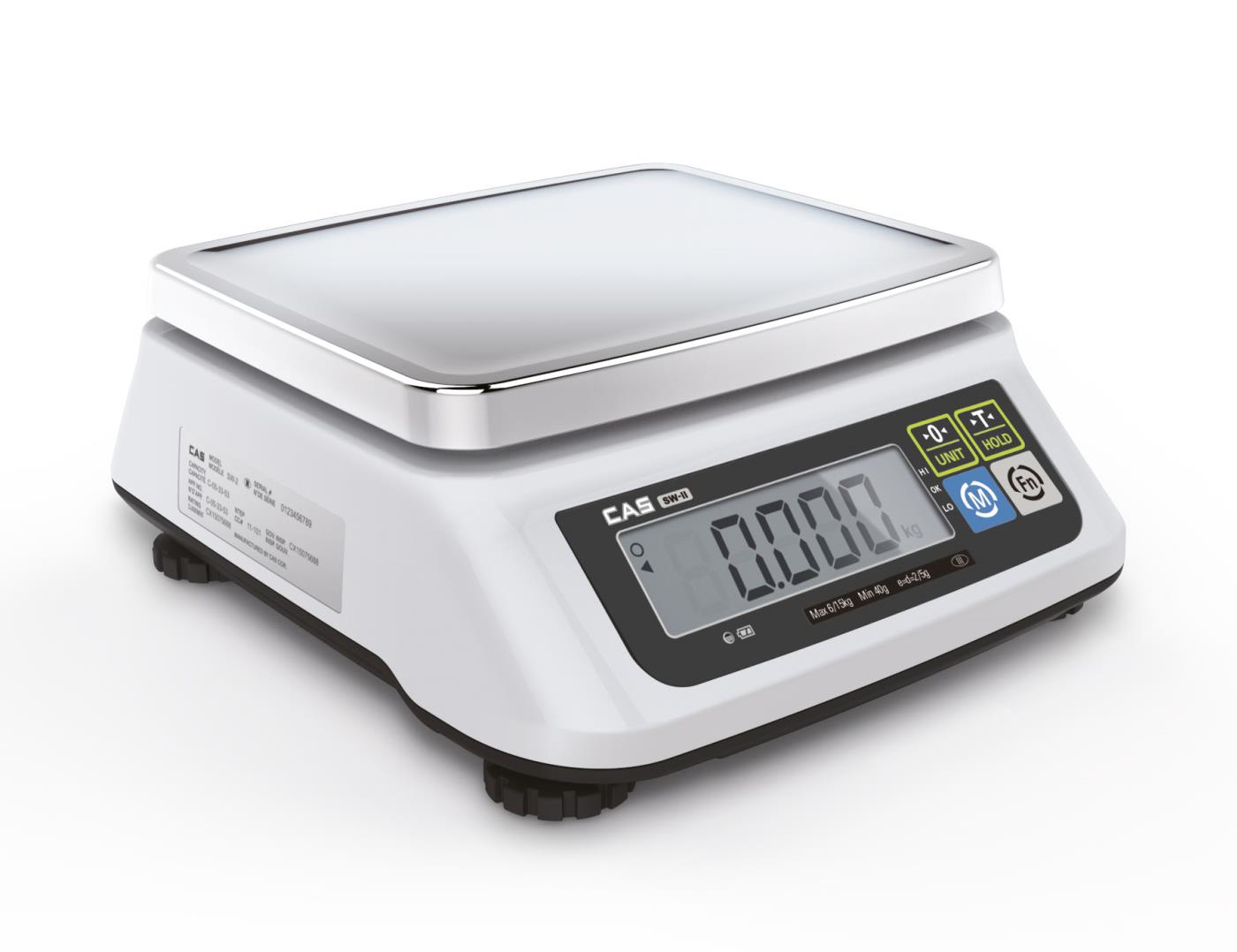
- Weighing range [Max] in kg: 6
- Power supply: plug-in power supply
- Functions: Totalling, Taring, Price calculation
- Digit increment [d] in g: 1
- Warranty services: DAkkS calibratable, ISO calibratable


- Weighing range [Max] in kg: 15
- Power supply: plug-in power supply
- Functions: Checking
- Digit increment [d] in g: 2
- Warranty services: DAkkS calibratable, ISO calibratable
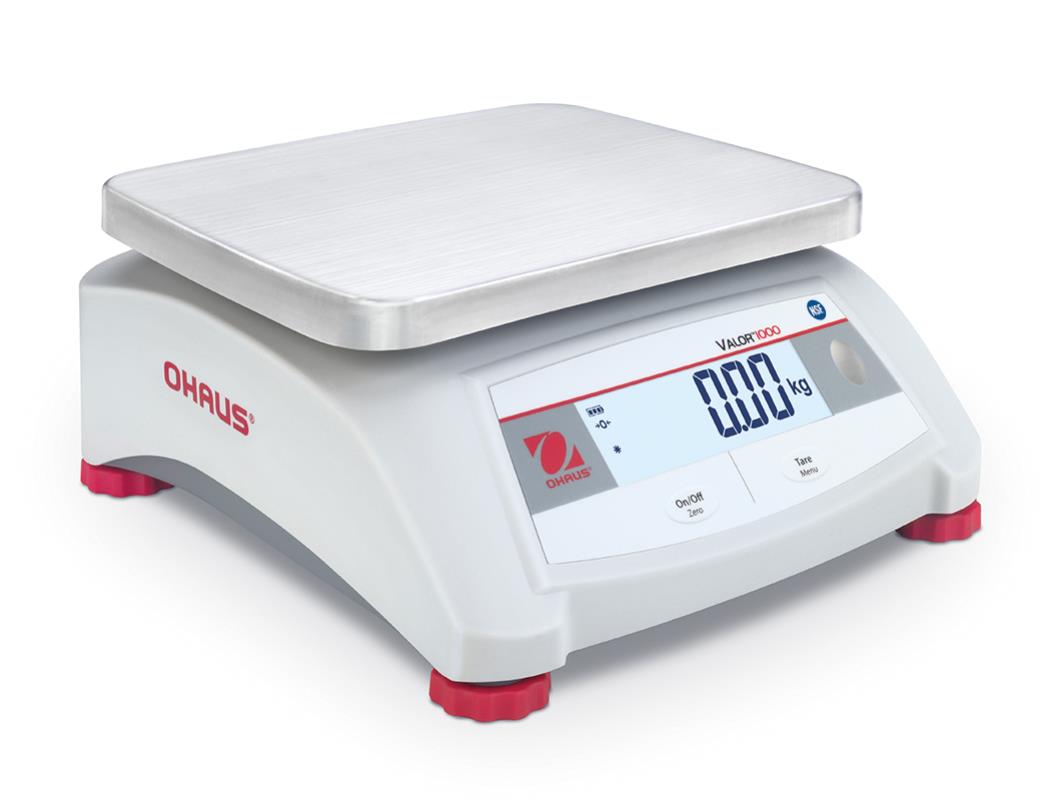
- Weighing range [Max] in kg: 30
- Power supply: batteries, plug-in power supply
- Digit increment [d] in g: 2
- Warranty services: DAkkS calibratable, ISO calibratable

- Food processing, precision weighing, hygiene, compliance
- Reliable, precise, robust, user-friendly
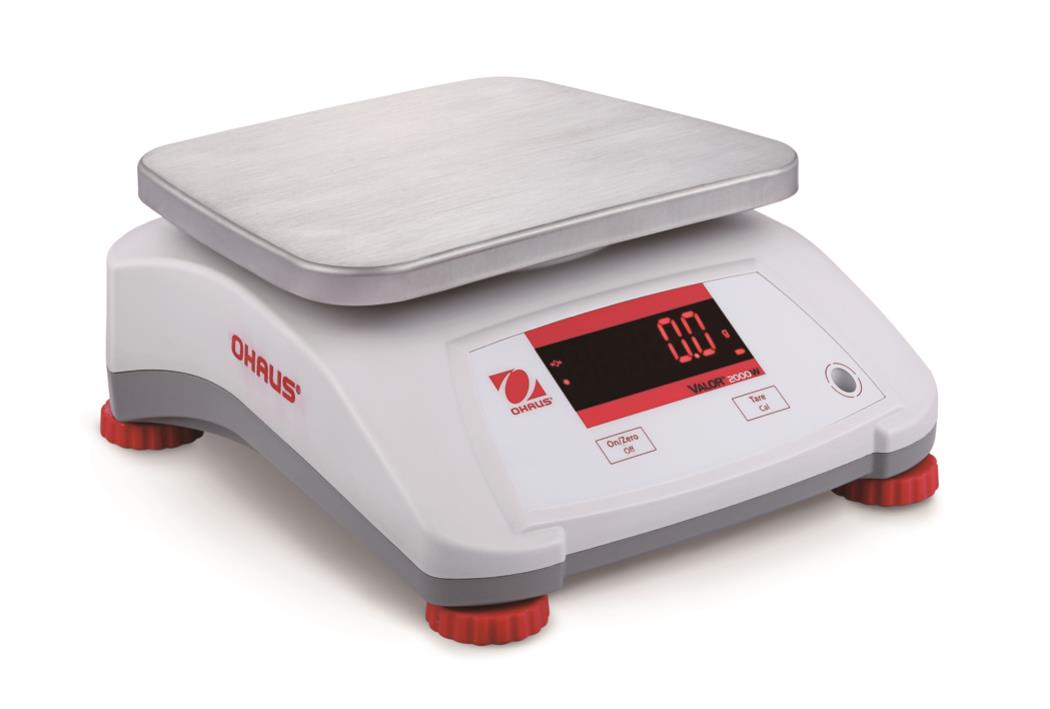
- Weighing range [Max] in kg: 1,5
- Power supply: plug-in power supply
- Functions: Checking
- Digit increment [d] in g: 0,2
- Warranty services: DAkkS calibratable, ISO calibratable
- Industry, Trade, Food, Laboratory
- Precise, robust, mobile, user-friendly

- Weighing range [Max] in kg: 6
- Power supply: plug-in power supply
- Functions: Checking
- Digit increment [d] in g: 1
- Warranty services: DAkkS calibratable, ISO calibratable

- Weighing range [Max] in kg: 15
- Power supply: plug-in power supply
- Functions: Percentage determination, Checking
- Digit increment [d] in g: 5
- Warranty services: DAkkS calibratable, ISO calibratable


- Laboratory, Catering, Food Processing
- Precision, Efficiency, Ease of Use
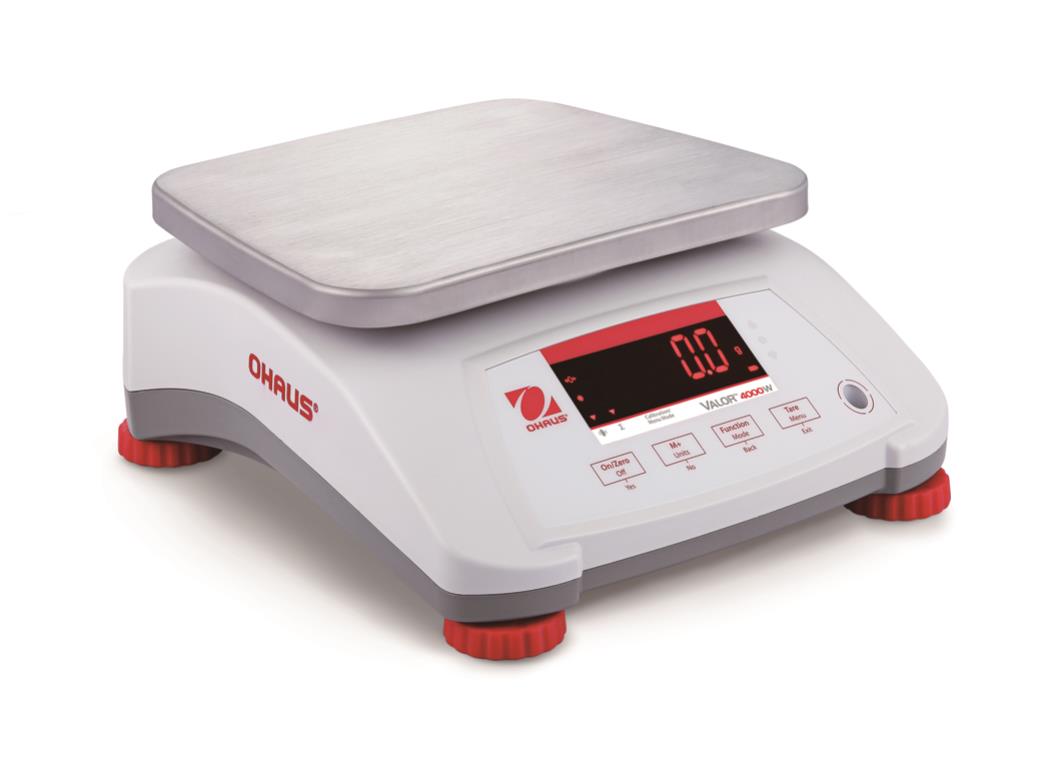
- Weighing range [Max] in kg: 6
- Power supply: plug-in power supply
- Functions: Percentage determination, Checking
- Digit increment [d] in g: 2
- Warranty services: DAkkS calibratable, ISO calibratable

- Industry, Laboratory, Precision, Hygiene
- Accurate, robust, user-friendly, mobile

- Weighing range [Max] in kg: 30
- Power supply: plug-in power supply
- Functions: Checking
- Digit increment [d] in g: 5
- Warranty services: DAkkS calibratable, ISO calibratable
- Versatile in demanding environments
- Ultimate precision and robustness

- Weighing range [Max] in kg: 6
- Power supply: plug-in power supply
- Functions: Checking
- Digit increment [d] in g: 1
- Warranty services: DAkkS calibratable, ISO calibratable
- Food Processing, Laboratory, Industry
- Weatherproof, High Precision

- Power supply: plug-in power supply
- Functions: Percentage determination, Piece counting
- Digit increment [d] in g: 0,0001
- Warranty services: DAkkS calibratable


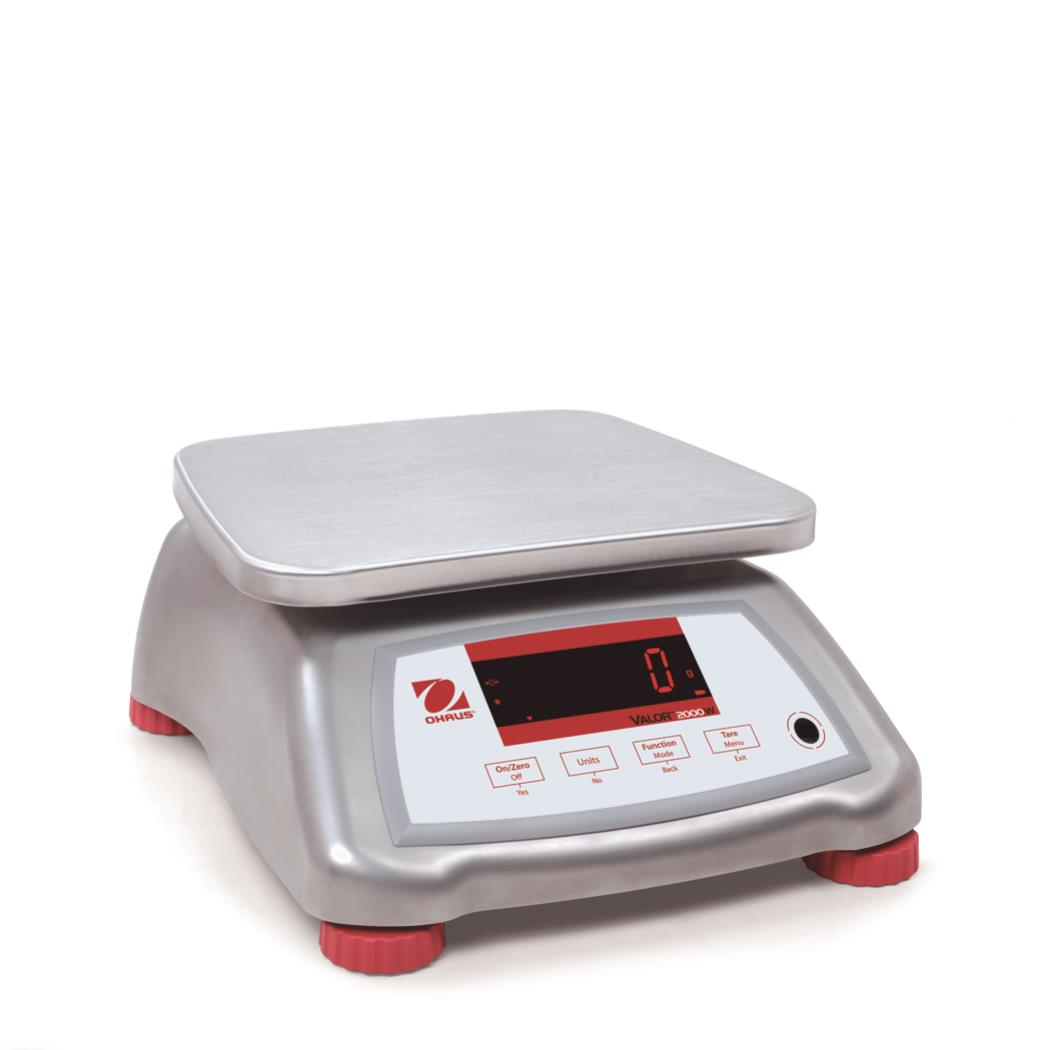
- Weighing range [Max] in kg: 1,5
- Power supply: plug-in power supply
- Functions: Checking
- Digit increment [d] in g: 0,2
- Warranty services: DAkkS calibratable, ISO calibratable

- Weighing range [Max] in kg: 30
- Power supply: plug-in power supply
- Functions: Checking
- Digit increment [d] in g: 5
- Warranty services: DAkkS calibratable, ISO calibratable
- Versatile in professional environments
- High measuring accuracy, robust design
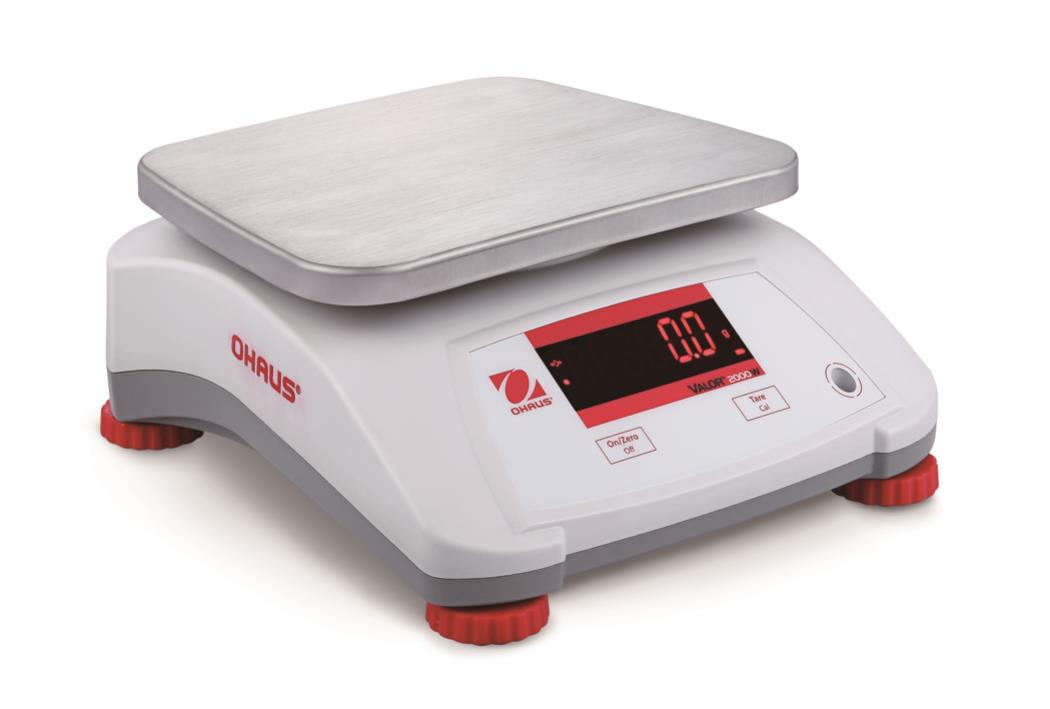
- Weighing range [Max] in kg: 3
- Power supply: plug-in power supply
- Functions: Checking
- Digit increment [d] in g: 0,5
- Warranty services: DAkkS calibratable, ISO calibratable
- Multifunctional in demanding environments
- Robust, precise, waterproof, compact

- Weighing range [Max] in kg: 1
- Power supply: batteries, plug-in power supply
- Functions: Taring, Switching between weighing units
- Digit increment [d] in g: 0,5
- Warranty services: DAkkS calibratable, ISO calibratable

- Laboratory, Gastronomy, Post Offices
- High Precision Accuracy, Robustness
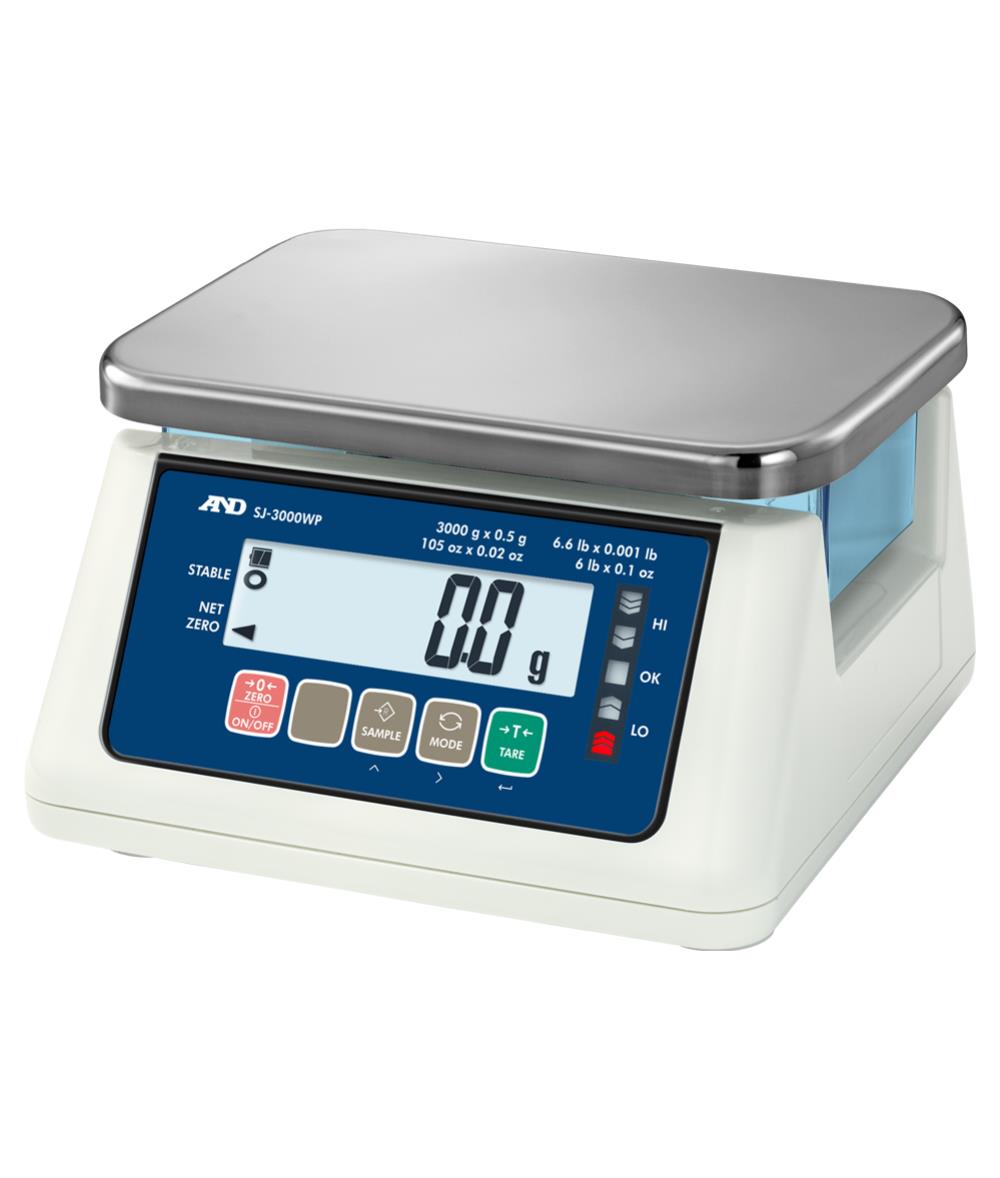
- Weighing range [Max] in kg: 6
- Power supply: batteries, plug-in power supply
- Functions: Checking, Taring, Piece counting
- Digit increment [d] in g: 0,2
- Warranty services: DAkkS calibratable, ISO calibratable

- Laboratory, Industry, Education, Kitchen
- High-precision, versatile weighing

- Weighing range [Max] in kg: 15
- Power supply: plug-in power supply
- Functions: Checking
- Digit increment [d] in g: 2
- Warranty services: DAkkS calibratable, ISO calibratable
- Meet diverse weighing requirements with precision
- Stainless steel, high load capability
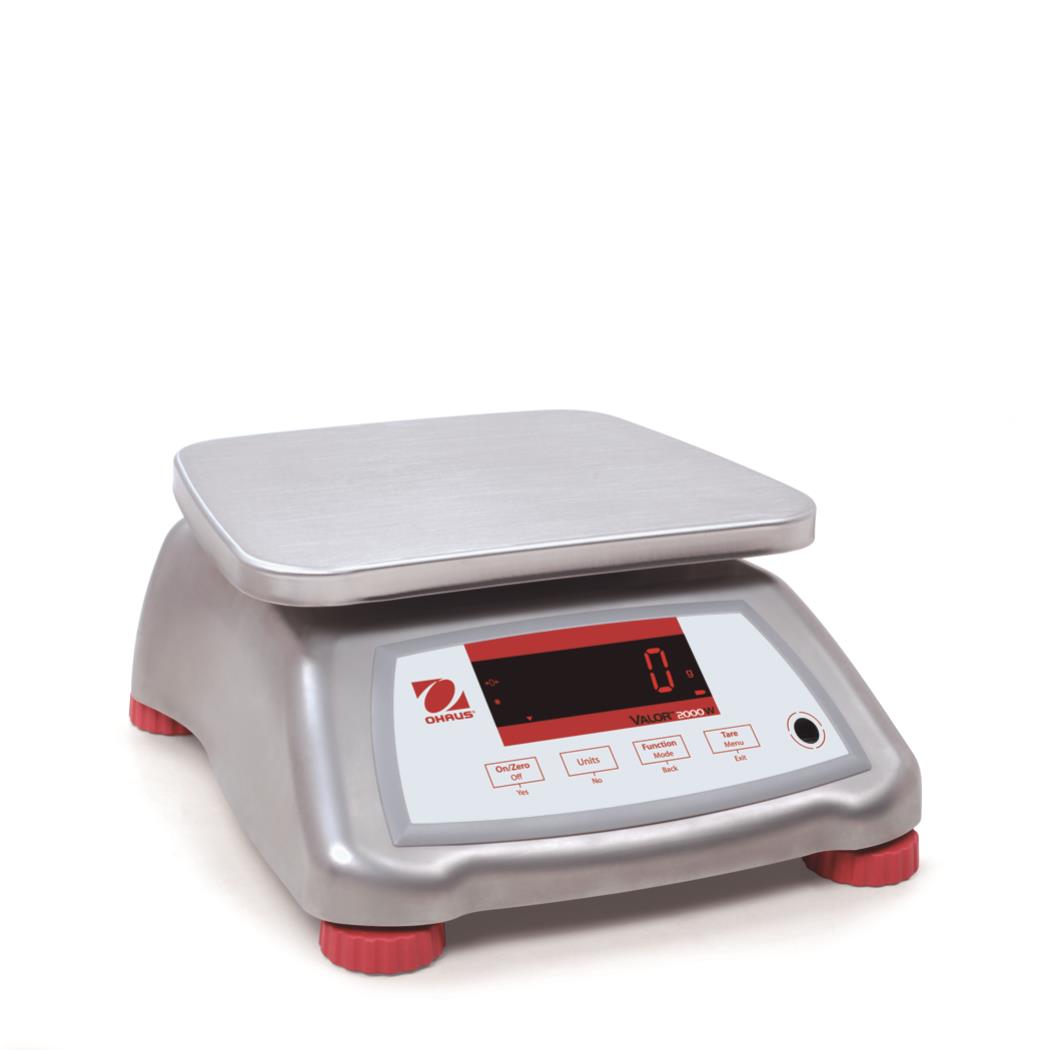
- Weighing range [Max] in kg: 3
- Power supply: plug-in power supply
- Functions: Checking
- Digit increment [d] in g: 0,5
- Warranty services: DAkkS calibratable, ISO calibratable
- Versatile in the food industry application
- Precise, robust scale technology
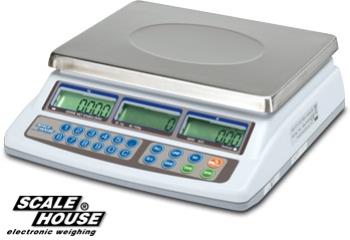
- Weighing range [Max] in kg: 15
- Power supply: plug-in power supply
- Functions: Totalling, Taring
- Digit increment [d] in g: 2
- Warranty services: Calibratable
- Commercial weight & price determination
- Precise, simple price calculation
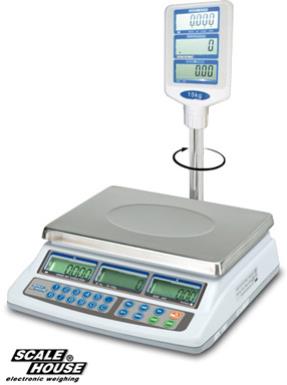
- Weighing range [Max] in kg: 6
- Power supply: plug-in power supply
- Functions: Totalling, Taring
- Digit increment [d] in g: 1
- Warranty services: Calibratable
- Trade, Precision, Flexibility, Efficiency
- Accurate, User-Friendly, Versatile, Durable
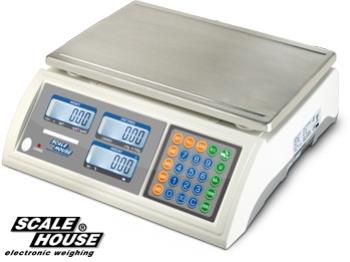
- Weighing range [Max] in kg: 30
- Power supply: plug-in power supply
- Functions: Totalling, Taring
- Digit increment [d] in g: 5
- Warranty services: Calibratable
- Commerce, market, butcher shop, bakery
- Robust, user-friendly, versatile, precise

- Weighing range [Max] in kg: 15
- Power supply: plug-in power supply
- Functions: Totalling, Taring
- Digit increment [d] in g: 2
- Warranty services: Calibratable
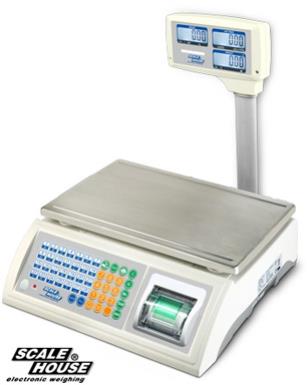
- Weighing range [Max] in kg: 30
- Power supply: plug-in power supply
- Functions: Totalling, Taring
- Digit increment [d] in g: 5
- Warranty services: Calibratable
- Commercial retail weighing processes
- Accurate rapid price calculation

- Weighing range [Max] in kg: 15
- Power supply: plug-in power supply
- Functions: Taring, Price calculation
- Digit increment [d] in g: 2
- Warranty services: Calibratable








Buy Retail Scales Online at ESSMANN Shop: Certified Scales for Retailers
Weight, item price, and total price often go hand in hand in the retail business: for instance with vegetables, fruits, meat, fish, and other weighed goods that retailers offer for sale on-site. Some scales today are used in a self-service manner, such as an initial measurement in the produce department as a first indication for the end consumer, while others are operated by the staff themselves - such as at the meat counter. What all these retail scales have in common is that they must meet legal requirements while simultaneously providing a transparent, comprehensible billing process.
ESSMANN Shop: Here business customers can buy retail scales and price-calculating scales online
Please note: Since January 1, 2020, a new regulation applies in Germany: Retail scales and receipt-printing scales must have a technical security feature (short: TSE). Furthermore, the German Calibration Ordinance requires that retail scales are necessarily certified. For this reason, you can buy pre-certified scales online from ESSMANN. The certification of these scales, including control scales and for instance label-printing scales, is consequently already included in the stated price.
When buying retail scales online, also consider the permissible maximum weight. Generally, retail scales and price-calculating scales can handle weights up to a maximum of 30 kg. In this regard, it is important to remember that the weight item exerts a temporarily disproportionate load on the scale when placed on it. Thus, if your customers or employees frequently weigh goods that weigh 11, 12, or for example 14 kilograms, you should opt for a scale with a maximum capacity of 30 kg, and not a model with a maximum load of 15 kg. This gives the weighing cells enough leeway to compensate for the momentary higher load during placement. It is also always important to ensure that the retail scales you buy online also match your product range and the goods to be weighed in terms of the minimum weight.
Types and Applications of Retail Scales
You can buy different types of retail scales here online: While these typically always find use with retailers, there are differences in their functionality and suitability that should be considered. Not only do you ensure strict compliance with legal requirements, but you also lay the foundation for efficient economic processes.
Here is an example for better orientation: The weighing range significantly determines the later place of use. Retail scales suitable for weighing fruits and vegetables are generally not suitable for weighing items like gold or silver. You should therefore consider which trade goods are weighed and the typical weight range they fall into. In general, as soon as the price of goods is linked to their weight, you will need price-calculating scales and certified scales. As this is often the case in practice, retail scales that you can buy online typically also come with a pre-certification.
According to EU Directive 90/384 EEC, under these conditions, you will need a demonstrably certified scale:
- the price of the goods in the commercial area is determined by the weight of the goods - ready-made packages are produced that have a certain weight - for all official purposes, e.g., fees or fines
A differentiation of the retail scales you can buy online at ESSMANN is possible according to their additional functionality.
Price-Calculating Scales Online Purchase - Save Work Steps and Create Transparency
Price-calculating scales offer several advantages: On one hand, they relieve staff since the price is automatically formed based on the determined weight and this step, including the otherwise involved time, is thereby eliminated. On the other hand, price-calculating scales create an added level of transparency for end consumers, which in turn has a positive effect on retailers and traders.
The price-calculating scales you can buy here online come with different sizes of weighing platforms and additional functions. Typically, they can be combined with a variety of goods, whereby the price results from the selected category of goods. Customers can thus select, for example, that they are currently weighing bananas, after which the price is formed based on the base price of the bananas - this is how price-calculating scales work with all other goods in the range. It obviously presupposes that prior price programming takes place directly on the retail scales.
To facilitate use, price-calculating scales often come with some accessories such as bowls or drawers. These primarily ensure the fixation of goods, which is especially important for round items, such as apples.
Receipt-Printing Scales Online Purchase - Weigh First, Then Print the Receipt Directly
Receipt-printing scales are another tool familiar not only to traders and commercial users but also to end consumers themselves. The unique benefit that receipt-printing scales offer is already evident from the name: they are able to record the measurement on paper by printing a corresponding receipt. While many retail scales can also be extended with a receipt printing function, receipt-printing scales have this integrated from the factory.
The retail scales usually print at least the price and weight on the receipt, and typically these can also be customized - for example, with printed brand logos, contact information, or special discounts valid in connection with the receipt. Fresh food counters use receipt-printing scales due to the legal requirements. The advantage that characterizes receipt-printing scales is clear: they combine two work steps into one, and they save a lot of space on-site - because the printing unit is made as compact as possible and "hidden" in the retail scales. It also does not interfere with the actual weighing process - which is, of course, a basic legal requirement for the use of such certified retail scales.
Label-Printing Scales Online Purchase - Directly in Specialty Stores at ESSMANN
Label-printing scales, as their name suggests, print the label directly after the weighing process. As a retailer, if you buy and use label-printing scales online, you have the opportunity to determine for yourself what information will ultimately be on the label and what it will look like. Label-printing scales can also be equipped with different types of labels, for example, those that are removable or waterproof.
Label-printing scales are also capable of printing the best before date directly on the label, provided this has been previously entered into the system. In this way, these retail scales, which you can buy online here, not only achieve an operational advantage but also generate genuine added value for your end customers.
Control Scales Online Purchase - for Verifying the Weight
Control scales, often referred to in the trade jargon as "Checkweighers", are true to their name for verifying a previously determined weight. In the goods transfer and sales of a retailer, such control scales do not necessarily need to bring a variety of functions, but rather enable quick and reliable verification of weight. This may be necessary, for example, when there are doubts about the results of other retail scales that were previously in use. With control scales, you can also regularly check the scales on-site to ensure that they are still functioning properly. Control scales, or plus-minus retail scales, are particularly common in the food, pharmaceutical, and beverage industries. If you buy the control scales online to use them for pre-packaged goods and prior measurements, you must comply with the Pre-Packaged Goods Regulation (short: FPVO) - which also means that these retail scales must meet and be able to demonstrate strict certification guidelines.
What Else to Consider When Buying Retail Scales Online?
Most retail scales that you can buy online typically have three displays: one shows the total weight, there is also a display for the base price (e.g. in Euro/kg), and another display that calculates and shows the total price. This also applies to label-printing scales that ultimately represent this information on the printed label.
Moreover, it is differentiated where exactly the display is located. If you want to buy retail scales online that are primarily operated by the end consumer in your store, a high display is recommended. This allows all specifications to be conveniently read at eye level. On the other hand, such retail scales are not necessarily suitable for mobile use, as they are more difficult to pack and transport due to the high display and the corresponding stand - which retailers who regularly offer their goods at markets should consider.
If you frequently offer and weigh goods as a retailer away from a storefront, you should pay attention to the additional functions of the retail scales: Price-calculating scales and receipt-printing scales can speed up workflows in hectic weekly markets, and some models also come with battery operation. Battery operation is not necessarily needed if the retail scales are used in a supermarket or directly at the butcher, as there is usually a continuous connection to the power supply.
Please note: When you buy retail scales online, the manufacturer's certification is typically valid for two years. For control scales used for pre-packaged goods, however, an annual review and certification are required.
Buy Online and Have It Conveniently Delivered: Your New Retail Scales from ESSMANN
If you have any questions, are wavering between several models, or are looking for label-printing scales that meet special requirements, the ESSMANN service team will be happy to advise you comprehensively, in detail, on an equal footing, and individually according to your business orientation. ESSMANN has been on the market for 163 years: with proven high quality at economical prices. Whether control scales, receipt-printing scales, label-printing scales, or other retail scales that you want to buy online: Browse through our diverse assortment, which you can also narrow down in advance with the filter options on the left. Of course, not only can you buy retail scales online here, but you can also take advantage of additional services from us, such as calibration, certification, repair, and professional maintenance of the respective scales. We see ourselves as a reliable partner for commerce, trade, and industry - for more than 163 years.